
The Narrative Arc: Turning Dry Summaries into Visual Stories
Sarah Jenkins, Content Narrative Expert
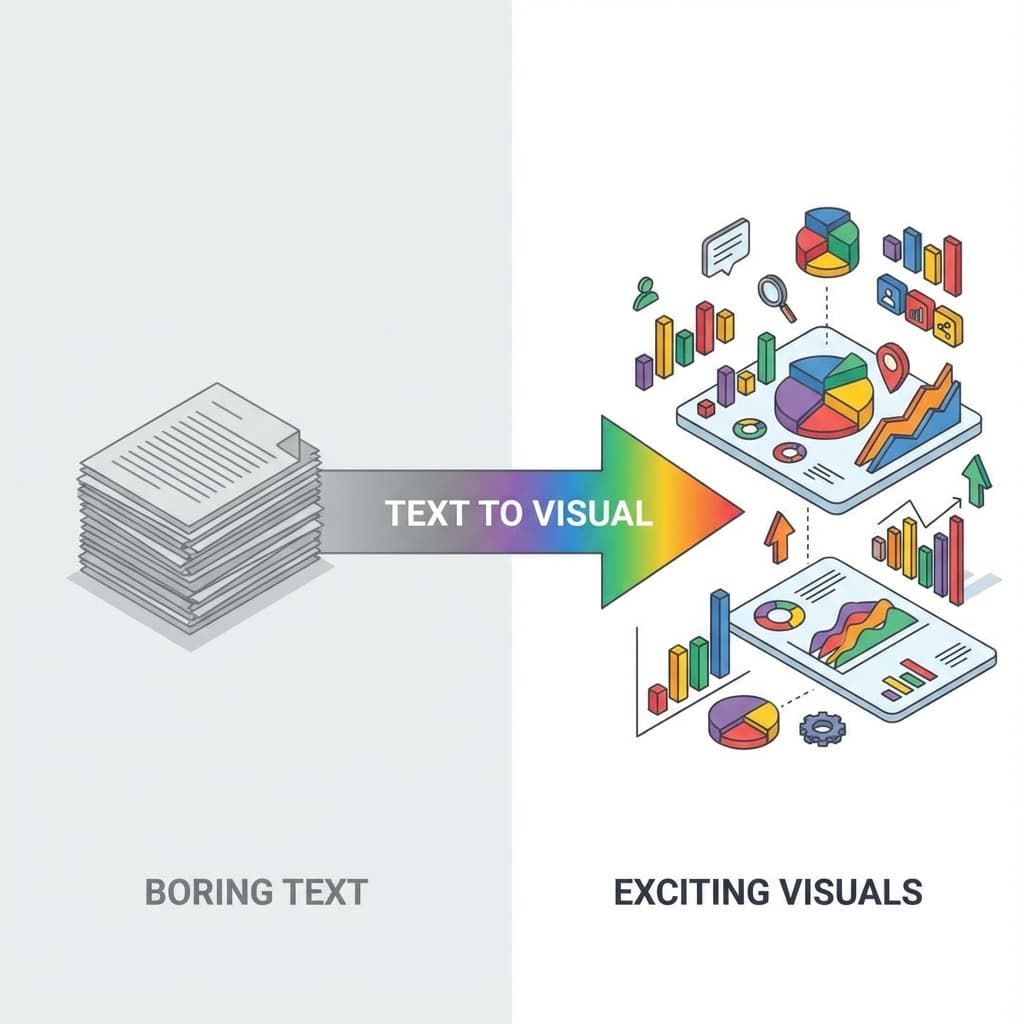
The Narrative Arc: Turning Dry Summaries into Visual Stories
We've all been there: staring at a 50-page executive summary and knowing we need to share this with a team that has a collective attention span of roughly 8 seconds. The mistake most people make is trying to visualize *all* the facts.
To create true engagement, you need to apply the Narrative Arc to your data.
The 3-Act Structure of a Great Infographic
1. **The Inciting Incident (The Hook):** This is your headline. It shouldn't just state the topic; it should state the *tension*. Instead of "Q3 Revenue," try "Why our Q3 Revenue skyrocketed despite the market dip."
2. **The Confrontation (The Data):** This is where you reveal the "Why." Use the [TextToInfographic online tool](https://texttoinfographic.online) to identify the 3-5 key nodes that explain the tension you set up in Act 1.
3. **The Resolution (The Takeaway):** Never leave your reader hanging. What is the one thing they should do *now*?
The "Coffee Shop" Test
A successful infographic passes the "Coffee Shop" test: if a user can't understand the core message of your graphic in the time it takes them to take a sip of coffee, it's too complex.
Technical Tips for High-Stakes Summaries
- Hierarchical Contrast: Ensure your primary claim is 3x larger than the supporting text.
- The Power of Whitespace: Professional design isn't about what you add; it's about what you leave empty. AI generators are now trained on these "Negative Space" principles to prevent visual clutter.
Conclusion
Turn your "Boring" into "Beautiful" by finding the story first, and the design second. In the attention economy, a story-driven visual is your most valuable currency.
Ready to tell your visual story?
Join thousands of users transforming boring text into stunning infographics in minutes. 100% Free. No Login Required.
Start Generating Now